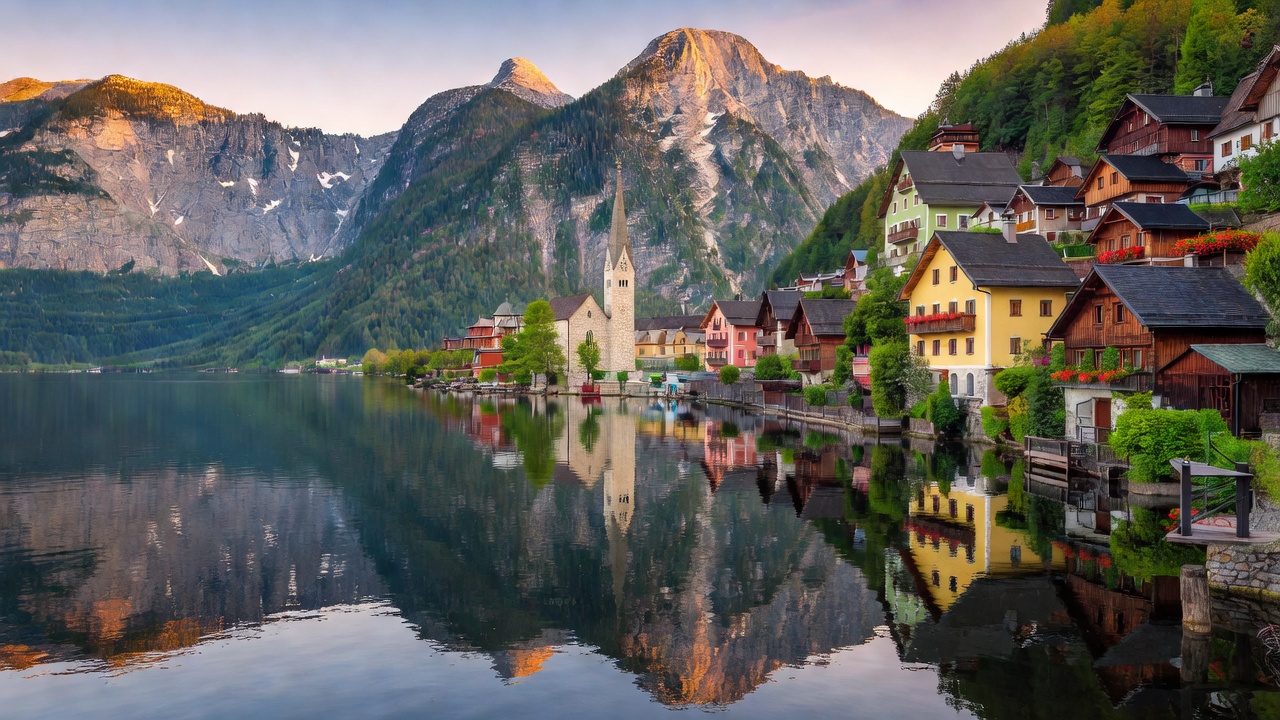
The Story of Hallstatt
Perched between the glass-like waters of the Hallstätter See and the steep slopes of the Dachstein Alps, Hallstatt looks like a place summoned straight from a fairy tale. For centuries, this village was accessible only by boat or via treacherous mountain paths. This geographic isolation helped preserve its unique architectural charm and rich culture.
Key Attractions & Experiences
Salzwelten (World's Oldest Salt Mine): Take the funicular high above the town to explore subterranean salt caverns worked by humans for over 7,000 years. Slide down wooden miner slides into prehistoric salt chambers.
Historic Market Square: Centered around a quaint Trinity column, the square features colorful 16th-century houses draped in ivy and climbing roses, filled with cozy cafes and artisan shops.
Beinhaus (Bone House): Located in St. Michael's Chapel, this repository holds over 600 artistically painted human skulls—a fascinating historical response to the village's limited cemetery space.
Pros & Cons for Travelers
✓ Highlights
- Unrivaled natural alpine scenery
- Rich archaeological history
- Ferry arrivals offer unforgettable views
⚠ Considerations
- Midday tourist crowds in peak summer
- Limited vehicle parking near center
- Early evening shop closures
Official Tourism Resources
Plan your visit through official regional tourism boards to ensure accurate ferry schedules and ticket availability.
Visit Official Hallstatt Tourism Site ↗